By Jacques Grimes, Goodwin Hospice volunteer
Editor’s Note: The patient’s name and identifying details have been changed to protect their anonymity, in accordance with HIPAA guidelines.
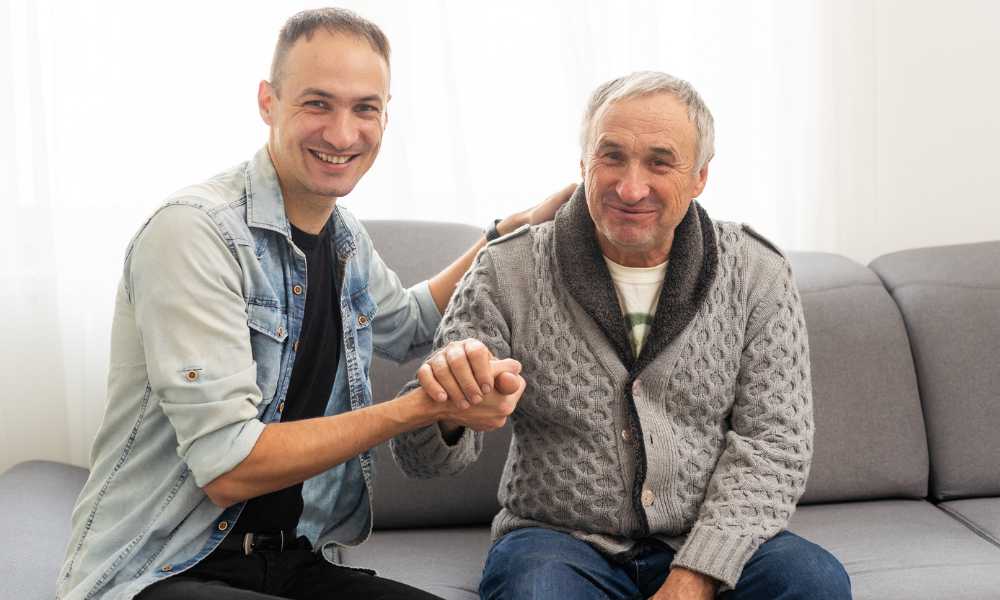
I was ready for just about anything my first patient, Robert, might need. I was a clown. I made him sandwiches, read to him, played his favorite music and swapped stories with him about our lives. What I did not realize was that all of this was building his trust, so that I could play a role that mattered a lot: a trusted nobody.
I have been on both sides of hospice care, first as a family member and now as a hospice volunteer with Goodwin Hospice. Only now do I understand how differently each one matters to the patient.
What A Family Carries
Family holds a person’s memory. They share the inside jokes, the supper-table banter, the places they went together and the good times, and they will carry the patient’s legacy forward.
They also often carry so much history: maybe a need for approval, old disagreements, blame, dependence. Everything at once.
Near the end of life, a patient may not have the energy to handle all of that gracefully. Many patients still want to protect their place in the family and their dignity. They may not feel able to talk to their family about certain things. Their family members might feel too emotional to hold the space the patient needs.
The Trusted Nobody
A hospice volunteer is different. The volunteer is there, but as a neutral party: a jack-of-all-trades who can listen without judgment, offer steady support and take care of practical things. That can help protect the patient’s dignity, take some of the tension out of the room and let the family simply be a family.
Being a “nobody” may sound like a lesser role. For a dying person, having a trusted nobody with them can bring immense relief.
Nearly everyone else who comes into a hospice patient’s room asks something from the patient, for good reasons. A nurse takes a temperature or checks medications. A social worker inquires about passions, needs or paperwork. Friends and loved ones who visit ask how the patient is feeling.
The hospice volunteer asks for nothing. They take their cues from the patient, talking when the patient wants to talk and sitting quietly when the patient does not.
Even when Robert lay silent, holding his hand or simply smiling at him told him I was there and that I cared.
What Robert Gave Me
What surprised me most was how much I received from him; it was far more than what I gave. Who was I to hear a dying man’s last words? He told me his doubts, his fears and his hopes, and finally, that he was ready to go.
I was not family. I was just a trusted nobody, and I believe that is exactly why he could say those things to me. I still carry them with me today.
What It Takes to Be a Hospice Volunteer
To do this job well, it is helpful to get to know who the person was before they became ill: what mattered to them and what they believed. That knowledge is what helps someone find peace at the end, and it starts with what the volunteer learns about the patient at the very beginning.
This is what I believe it takes to be a hospice volunteer: comfort with being a nobody. You have to be prepared for the outcome, which is loss. How well you help someone toward this outcome is your measure of success.
Do not take on this role to make new friends, to redeem yourself or to honor a loved one you lost. Do not do it for personal gain. Do it because you care. The reward will come to you through the work.
A Note from the Goodwin Hospice Team: How to Volunteer With Goodwin Hospice
Goodwin Hospice volunteers serve patients in private homes, retirement communities and nursing centers throughout Northern Virginia, as well as in Goodwin Senior Living Campuses. Volunteers can help by:
- Visiting with patients to talk, listen, read or sing
- Giving caregivers a short break to rest or run errands
- Bringing a trained dog to visit as a Pet Companion Volunteer
- Offering Reiki or spiritual support, with the appropriate training
- Helping the hospice team with administrative work
Volunteers must be at least 21 and pass a background check and TB test. If someone close to you has recently died, Goodwin Hospice recommends waiting a year before you begin volunteering.
To start, fill out the volunteer application form. You can also learn more about volunteering with Goodwin Hospice here.
____________________
Jacques Grimes has been a hospice volunteer with Goodwin Hospice since 2025.