
By Timaeus Reed
When someone begins experiencing changes in memory or thinking, families may not know what kind of support would help most. They might feel like their loved one could use some supervision and support, while not being quite at the point where they need assisted living or memory care.
That’s where a social day program can help. This kind of program allows older adults experiencing cognitive changes to continue living independently while still benefiting from more structure, more conversation and more opportunities to spend time with other people.
At Goodwin Living, that program is called Thrive.
Based out of The View Alexandria (TVA), a Goodwin Senior Living Campus, and developed by Goodwin Brain Health, Thrive serves older adults and families across Northern Virginia.
What Is a Social Day Program for Older Adults?
A social day program is designed for older adults with mild cognitive impairment who benefit from daytime structure, social interaction and engaging activities while continuing to live at home or in an independent living community. Unlike assisted living or memory care, participants attend during the day and return home afterward.
Thrive programming brings conversation, games, creative projects, outings, music therapy, tai chi and light exercise guided by trained Goodwin Rehabilitation therapists. The program also incorporates StrongerMemory, a Goodwin Brain Health program shown to support cognitive health through daily reading, writing and math exercises. What’s more, Thrive participants spend time outside the program room, with outings that have included a Washington Nationals game, the National Air and Space Museum, local restaurants and pottery painting.
For Joan Sonnenschein, a resident at TVA who has been part of Thrive since the program began in March 2025, that variety is one of the reasons she keeps coming back. She described Thrive as “an enjoyable way to spend time with other people” and said the discussions help “get your brain going.”
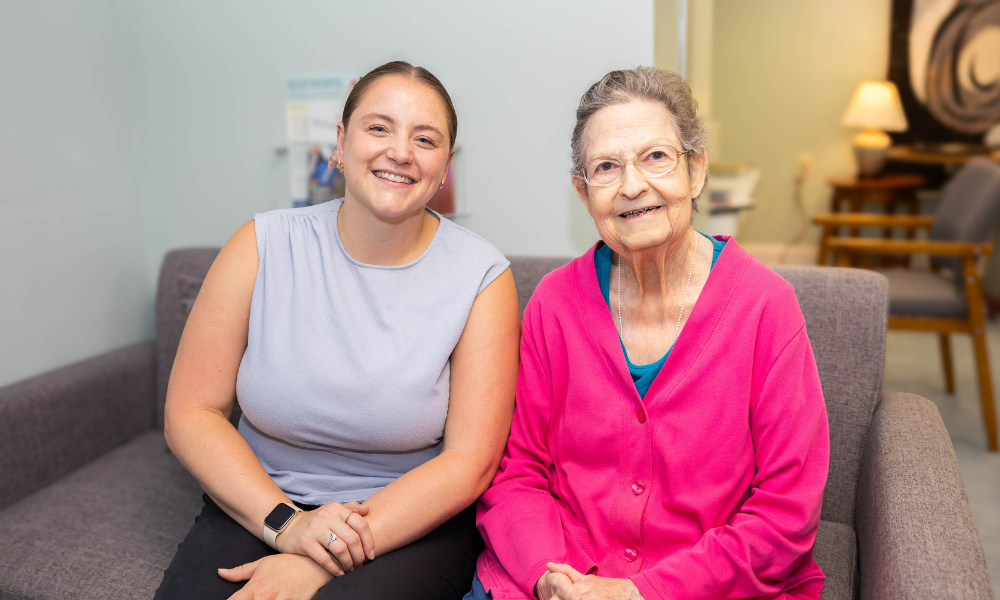
As Social Day Program Manager, Samantha Murray leads Thrive’s daily programming along with her team and works closely with participants to shape activities around their interests, abilities and energy.
“Each day is designed with purpose, created with our participants’ interests and variety in mind,” Samantha said. “We think about how each activity gives people different ways to show up. One conversation might bring out a memory, a game might spark friendly competition and an outing may give the group something new to experience together. That mix helps each day feel engaging, familiar and worth looking forward to.”
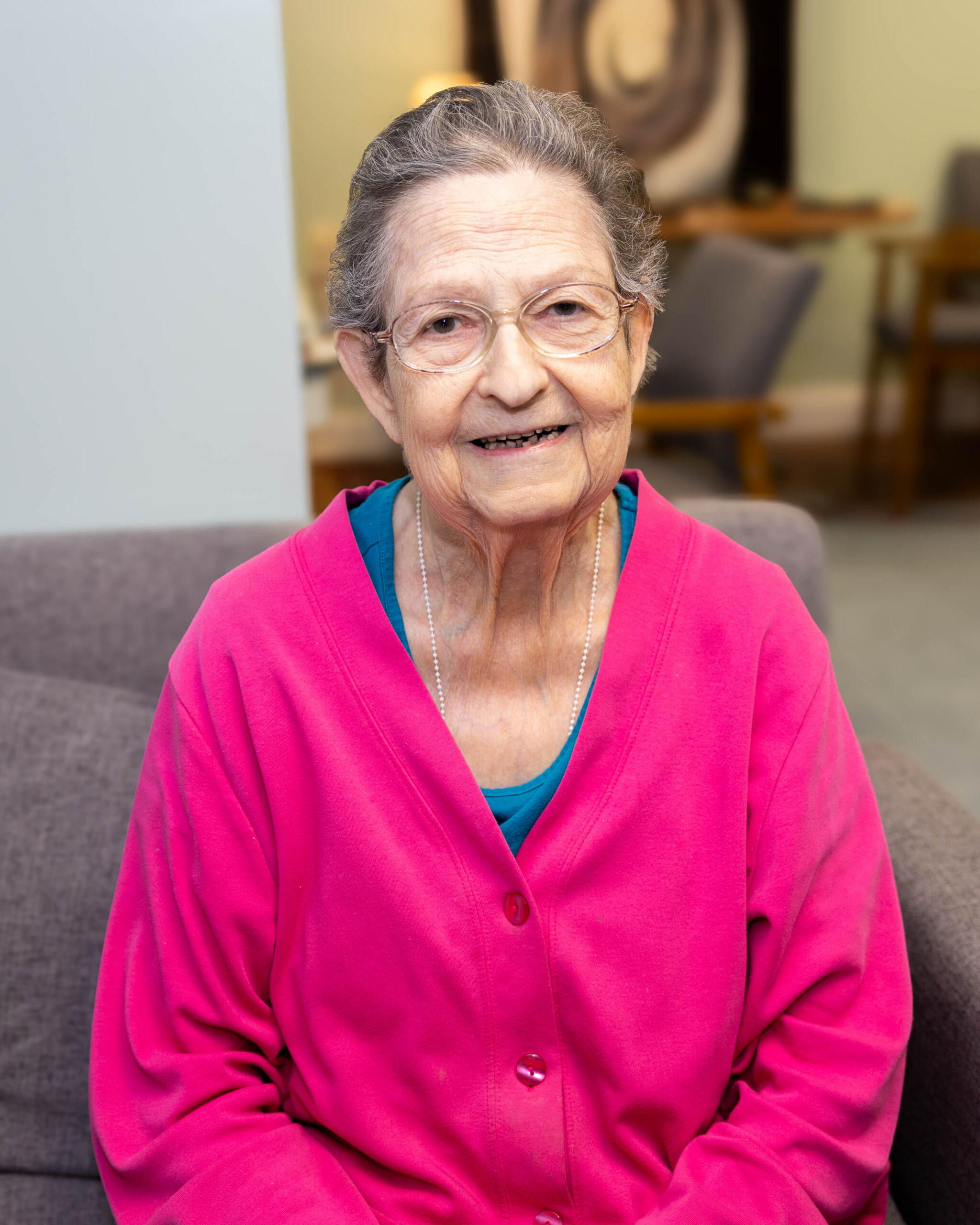
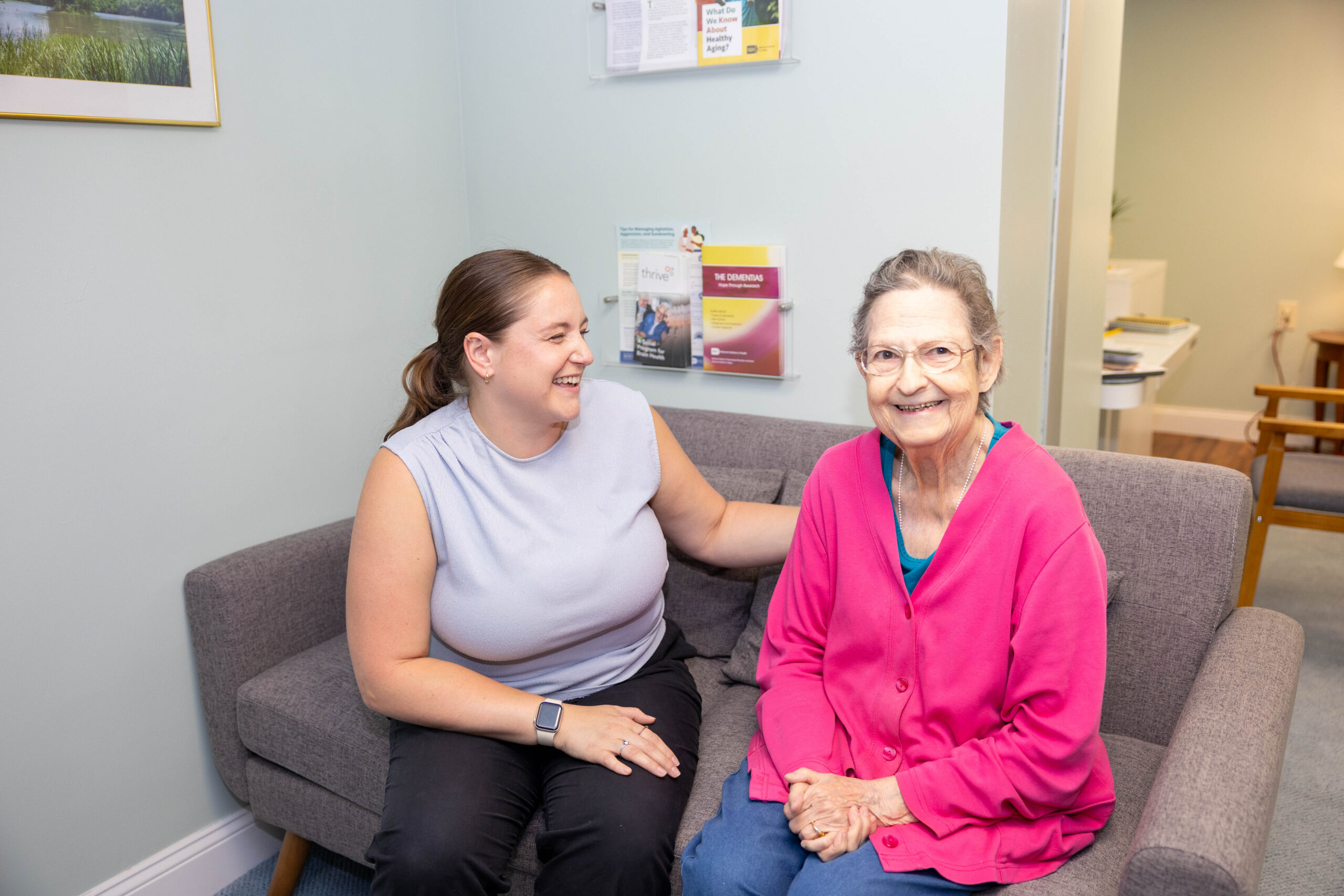
Caption: Joan Sonnenschein, a Thrive participant and resident at The View Alexandria, has been part of the program since it began.
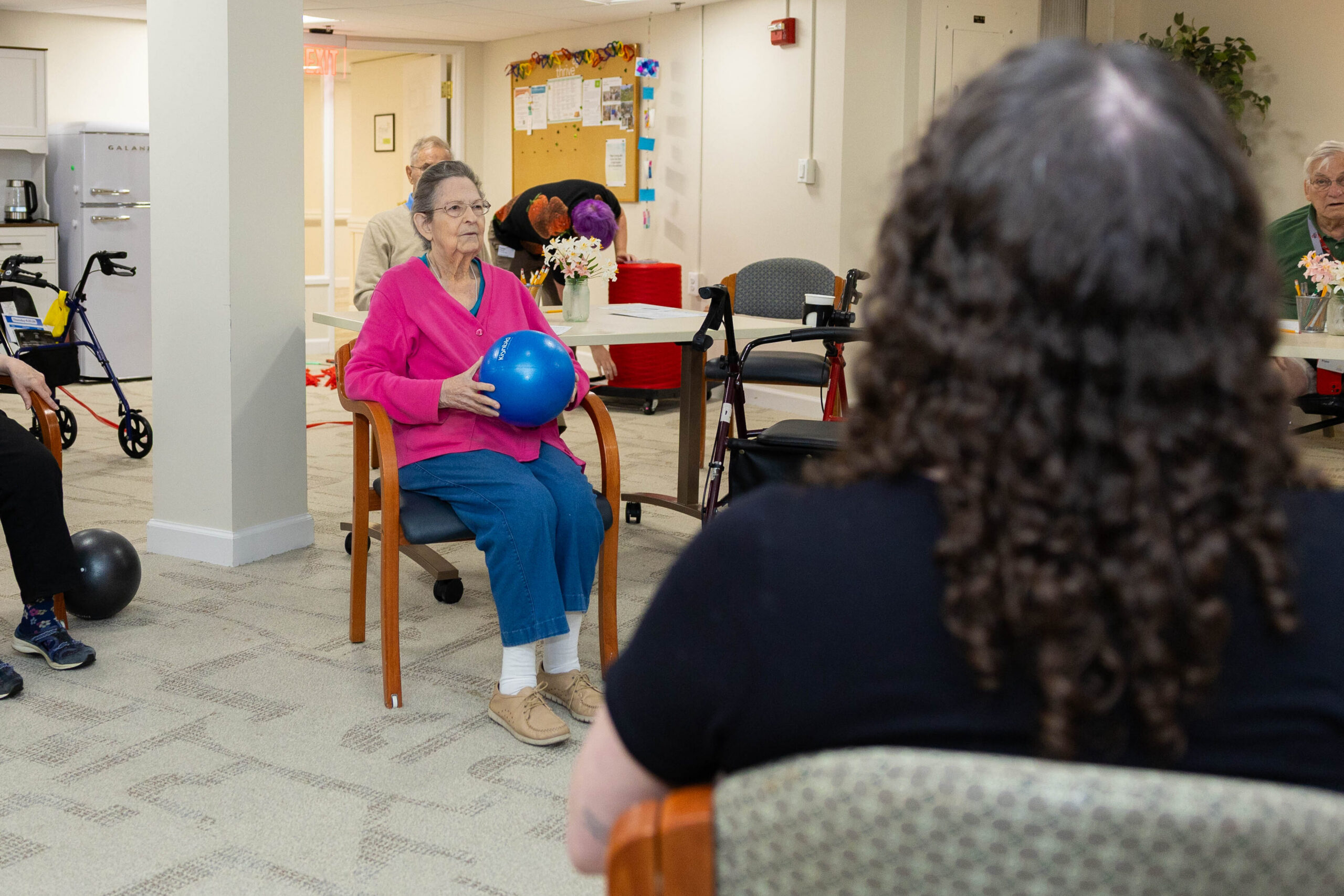
Caption: Joan takes part in light exercise at Thrive with support from a trained Goodwin Rehabilitation occupational therapist.
That combination of structure and variety helps Thrive feel familiar without feeling repetitive. Each activity gives participants a different way to engage, whether they are answering a question, sharing a memory, joining a game or taking part in a group outing.
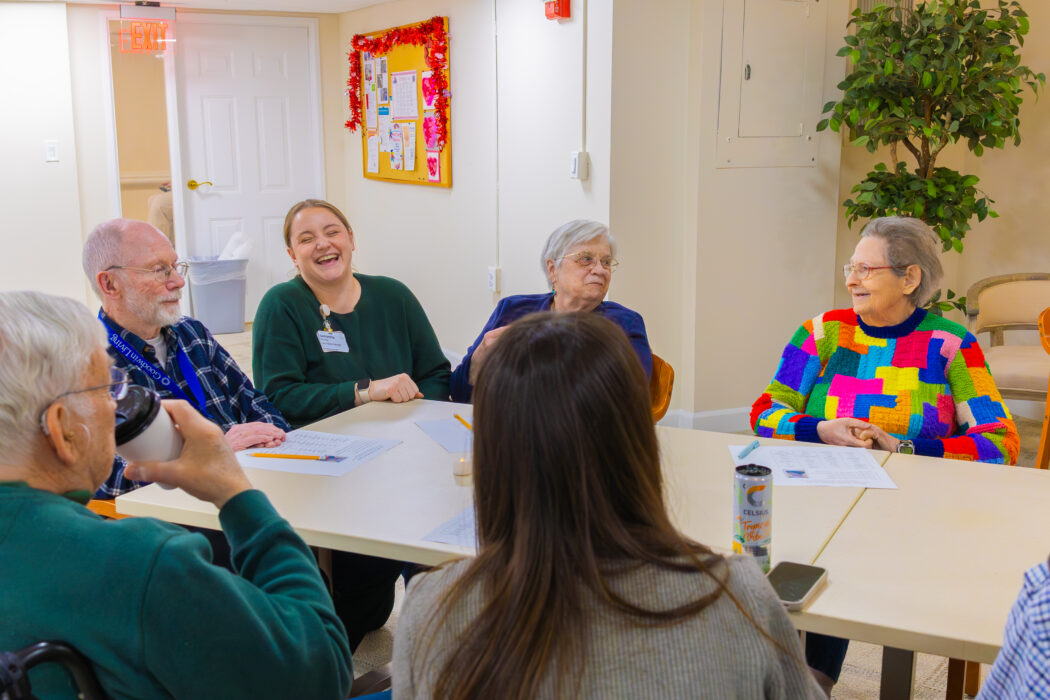
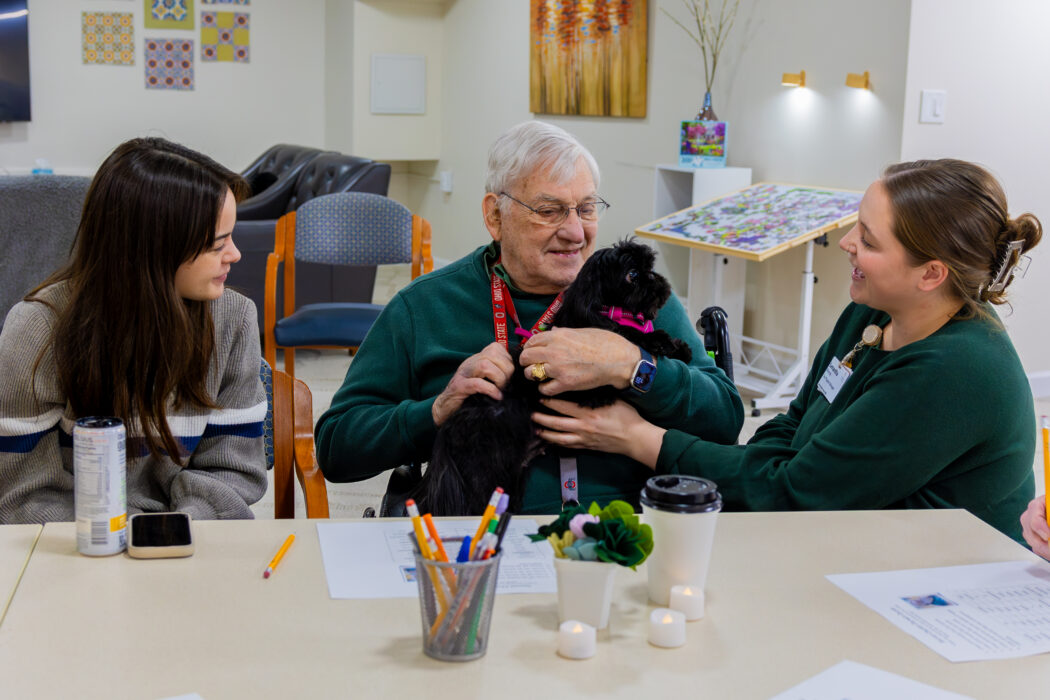
Caption: Social Day Program Manager Samantha Murray leads a Thrive group activity with participants, including Joan Sonnenschein, far right.
Why Social Connection Matters for Older Adults
That kind of engagement matters because social connection is more than a pleasant part of the day. For older adults, isolation and withdrawal can be closely tied to lowered emotional well-being and cognitive health. Depression and dementia can share symptoms such as low motivation, social withdrawal, difficulty concentrating and changes in daily functioning.
At Thrive, guided discussions give participants a chance to answer questions, share memories and hear perspectives that may be different from their own. That is why changes in energy, participation and connection can stand out so clearly to the people closest to someone.
“I have noticed that over time, participants begin to feel their place within the group,” Samantha said. “Even if they don’t always remember every name or activity, they remember the feelings: connection, belonging and a sense of accomplishment. You can see that comfort grow in how they engage, how they show up and how they support one another. That’s a big part of what makes Thrive so meaningful. It creates an experience that stays with people, even beyond the day itself.”
For Joan’s family, those changes became part of how they understood the impact of Thrive. Joan’s daughters shared that they hoped the program might help their mother become more active and engaged again. After learning more about Thrive, they agreed it was worth trying.
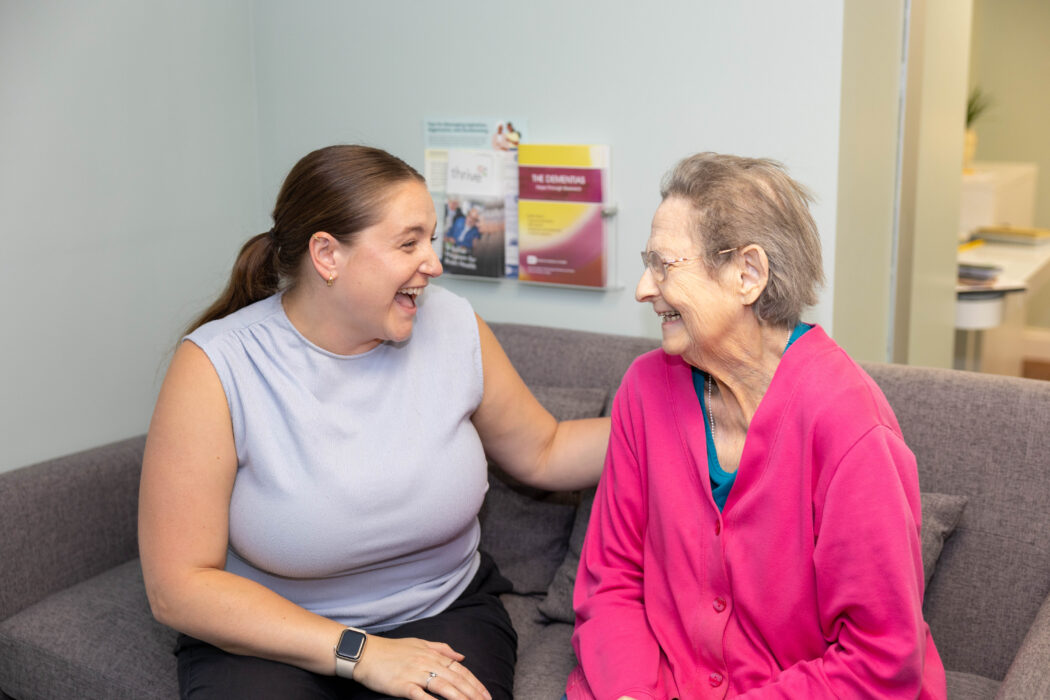
Caption: Joan (right) and Samantha Murray share a light moment during a day at Thrive.
The difference became clear within the first couple of weeks. Joan’s improved energy and interactions with family and others in the community were noticeable to her family and community staff.
Joan’s daughters described seeing their mother “brighten” in ways the family had not seen for more than a year. Joan was engaging more actively in conversations and sharing how much she enjoys daily programming at Thrive, including puzzles, math and trivia.
“It’s been wonderful to hear her laugh again,” her daughters shared.
Joan’s daughters also credited the Thrive team with creating the kind of environment where that change could take hold. They described Social Day Program Manager Samantha Murray as bringing “sunny, creative and positive energy” to participants, and said Samantha’s background in music therapy helped reawaken Joan’s own love of music and singing. With Samantha’s encouragement, Joan began taking part in Encore Sentimental Journeys.
Looking back on Joan’s first year in the program, her daughters shared that Thrive has “truly revitalized” their mother and created a positive, meaningful experience for the whole family. Joan described the program in simpler terms: the people, the conversations and the familiar routine of being together.
For Joan, that experience is shaped by both the group and the people leading it. She talked about the community with warmth, pointing to the mix of kindness, curiosity and fun that makes Thrive feel welcoming.
She also credited Social Day Program Manager Samantha Murray with helping create that sense of connection, sharing how Samantha keeps the group moving from one activity and conversation to the next, and her presence has become an important part of the program’s weekly routine.
“We miss her when she’s not here,” Joan said.
Is a Social Day Program Right for Your Loved One?
Every person’s experience with aging looks different. Some people want more chances to be around others during the week. Others are living with mild cognitive impairment or early-stage dementia and can benefit from familiar routines, guided discussions and activities that help keep them engaged.
A social day program might be a good fit for individuals who:
- Experiences early to mild cognitive impairment
- Live at home or independently and would benefit from a reason to get out during the day.
- Enjoy conversation, group activities or shared meals with peers.
- Would benefit from questions, stories, games and discussions that help keep their minds active.
- Have caregivers who would appreciate knowing their loved one is spending time with others in a safe and welcoming setting.
For many families supporting a loved one with mild cognitive impairment or early-stage dementia, programs like Thrive provide a helpful bridge between complete independence and more intensive levels of care.
When asked whether she notices a difference in herself because of the program, Joan answered with the honesty of someone who has been there since the beginning.
“I don’t know what I would be like without it,” she said.
Thrive is designed to support those moments of connection and engagement. Time spent with other people, questions that lead to conversation and outings that create shared memories can make a meaningful difference.
Schedule a Trial Day at Thrive
Joan’s advice to anyone considering Thrive is simple: “Try it. You’ll like it.” A trial day gives prospective participants a chance to meet the group, join the conversation and see what Thrive feels like for themselves. For families in Falls Church, Arlington, Alexandria, Fairfax and throughout Northern Virginia, Thrive offers a welcoming place to explore meaningful daytime support at The View Alexandria.
To schedule a visit, contact Social Day Program Manager Samantha Murray at 703-328-8859 or choose a trial date online.
_________________________________________________________________________
Timaeus Reed is a Marketing and Communications Specialist at Goodwin Living. He plans, writes and designs for internal and external campaigns that support all areas of the organization. He relocated to D.C. to join the team in the summer of 2021. When he isn’t getting lost in traffic, Timaeus loves listening to live Go-Go music and stand-up comedy.