
By Noël Durman
Early in her hospice career, Tammy Suggs sat down with a man who was about to begin end-of-life care because his liver was failing. He was exhausted, facing hard decisions and had little to fall back on. Without strong insurance coverage or a support system nearby, he was presented with a plan to move into a skilled nursing facility, and that was something he did not want.
What Tammy experienced during that conversation stayed with her.
She saw a man who believed no one cared what happened to him, and she saw what it meant when someone finally did; someone who took the time to listen, to understand what mattered to him and to help him regain some control over the time he had left.
“That was when I realized that the moment someone chooses hospice is such a meaningful one,” Tammy said. “It’s not just about supporting their end of life. It’s about helping someone decide how they want to live the time they have and making sure they know they’re not alone in it.”
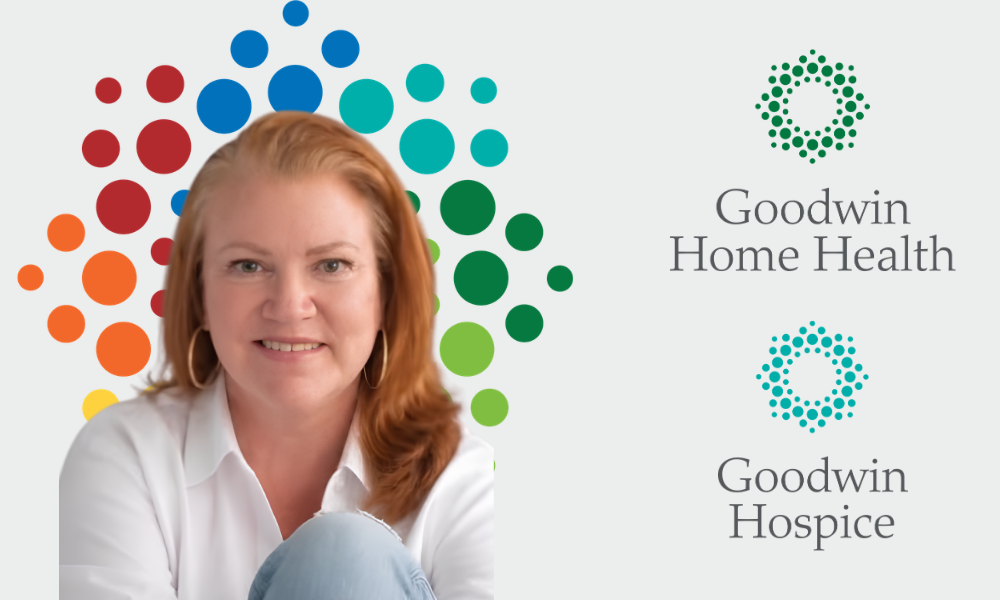
Tammy joined Goodwin Living Health in June 2026 as Executive Director of Home Health & Hospice. Prior to this, she had spent years as a bedside nurse in both home health and hospice organizations before stepping into leadership roles. Her approach has been shaped by what she learned at the bedside: every person has worth, every person deserves to be heard, and caring for one another is some of the most meaningful work there is.
She now leads two programs – Goodwin Hospice and Goodwin Home Health – with a shared goal to help people receive compassionate, expert care wherever they call home.
Finding Her Way to Nursing
Like many, Tammy came to nursing on her own timeline. She had wanted to become a nurse for a long time but waited until her youngest child started kindergarten to go back and finish nursing school. She began her career working in acute care at a hospital, before transitioning to home health and then hospice nursing.
What pulled her toward nursing in the first place was being able to have the time to truly care for people. Nurses get to spend more time with patients than almost anyone else in healthcare, and Tammy saw that as the whole point.
“There are so many different belief systems in the world,” she said, “but the one thing that’s the same across all of them is that it’s our job to care for and love one another. Nursing, and hospice especially, is my way of doing that. It’s my calling.”
That belief guides her as a leader. Ask her what she carries from working at patients’ bedside into her new role, and she comes back to the same things: “love people, listen to people and recognize the worth in every person.”
Learning Hospice From Both Sides of the Bedside
While Tammy was training to be a hospice nurse, she was also experiencing it as the daughter of a hospice patient.
Her father’s health was declining. He hated hospitals, and he had grown exhausted by everything they kept asking of him: the appointments, the treatments and the endless decisions. Tammy started talking with him, gently, about hospice.
A hospice chaplain then came and sat with her dad for no other reason than simply to be present with him. That visit made a big difference for Tammy’s dad, bringing him comfort and peace, and it showed Tammy the difference hospice could make in helping someone feel supported and cared for at the end of life. With hospice care, her father was able to have a peaceful death surrounded by compassion, and that experience stayed with her.
The following year, her mother entered hospice care as well. By then, Tammy understood the experience from both sides of the bedside: not only as the nurse in the room, but as the daughter sitting beside the bed.
That experience shaped how she talks about this work.
“It’s a deeply personal, intense part of nursing, and people who haven’t been through it can find it hard to understand,” she said. “You have to be able to offer candor with a soft voice. You really have to love people as humans.”
For Tammy, hospice is not about giving up. It is about helping people focus on what matters most.
“By the time someone is considering hospice, usually doctors have been telling them what to do for a very long time. ‘Take this medicine. Get these labs. Have the surgery. Do this chemo,’” she said.
These instructions mean well; medicine is designed to treat illness. Yet, a time may come when a treatment plan and a person’s hopes for their remaining time feel like competing goals.
Hospice helps the patient take the lead.
“You finally get some say again,” Tammy said. “You can aim for the kind of days you want to have with the time you have left.”
As a nurse, Tammy cares most about that balance: managing pain and symptoms well enough that someone can spend an afternoon with their grandkids, or at a ball game, if that is what matters most to them.
Drawn to “Sacred Work”
Tammy was drawn to Goodwin Living in part because it is a nonprofit organization. Goodwin Hospice is one of only two nonprofit hospice providers left in Northern Virginia, and that mattered to her.
“Caring for someone at the end of their life is something we do for each other,” she said. “It’s sacred work. Being a nonprofit allows Goodwin Hospice to focus first on what patients and families need.”
For Tammy, that means having the flexibility to provide care based on the person in front of her. “If a patient needs a two-hour visit, we can give them a two-hour visit,” she said.
That conviction about fairness started long before her nursing career. Tammy grew up seeing how much a person’s circumstances can shape the kind of support they receive. Her grandparents had very little; they lived in a small home with a dirt floor. Those experiences stay with her and inform the way she sees care today.
“Everyone deserves this love and excellent care at this time of their life,” she said. “It should never depend on how much money someone has.”
Helping People Heal at Home
The desire to focus on patients first also impacted Tammy’s decision to work in home health, made even before she’d had experience with hospice nursing. “I fell in love with going into peoples’ homes and helping them when they couldn’t go out of their homes for care. I found it especially rewarding to be able to make their living situation, and therefore their life, better.”
While hospice focuses on comfort and quality of life for people with life-limiting illness, Goodwin Home Health supports people who are working toward recovery, strength and independence at home. The program provides short-term medical care and rehabilitative therapy after an illness, injury or surgery, with services shaped around what each patient needs. A doctor’s order is required, and Medicare covers eligible home health care at 100%, while most insurance plans cover some or all of the cost.
Tammy saw the difference this care could make in one of her very first home health cases, when a patient with complicated needs required careful education and close coordination with his doctor. With steady support at home, he went from barely being able to manage everyday activity to regaining enough strength and confidence to ride his bike around the neighborhood again. “I’ve never forgotten him,” Tammy said. “That’s what home health can do.”
Home health patients might receive skilled nursing, wound care or help managing conditions such as heart disease or diabetes. They can also receive physical, occupational or speech therapy to rebuild strength, steadiness, communication or daily living skills; or support from a social worker who can help families sort through practical needs and connect with resources. Goodwin Home Health also offers specialty programs for people living with Parkinson’s, heart conditions and respiratory illness.
“When you care for someone in the place they call home, you see their whole life, their family, their routines, what they’re working to get back to,” Tammy said. “You’re a guest in their world, and that’s a privilege. It’s some of the most rewarding work there is.”
Looking Out for Her Team
In her work as a nurse, Tammy saw the value of strong leadership. “I learned that strong leaders need to take care of the people doing the work as much as we needed to take care of our patients,” she said.
“Our team members carry a lot,” she said. “Nobody can do this job day in and day out without support.”
She believes leadership has to recognize the emotional weight of caring for people through some of life’s most vulnerable moments. That means encouraging team members to use the resources available to them, being understanding when someone needs time away, and keeping her door open so people feel comfortable speaking up.
Her goal is simple: for team members to feel seen, respected and supported.
“When team members feel supported, they are better able to bring their full presence to the people counting on them,” Tammy said.
Seeing the Person First
Outside of work, Tammy is happiest surrounded by her family, including her children and grandchildren. She’s settling into Northern Virginia, which is a long way from her roots in Alabama where she grew up and lived until recently. She’s exploring it the way she likes best: on weekends, she and her husband get in the car with no set agenda, sightseeing and people-watching wherever the road takes them.
Whether she’s spending time with loved ones or chatting with someone she has just met, Tammy is drawn to people’s stories. That same curiosity and compassion shape her approach to care.
“People want to be heard. They want to be loved. They want to know they have value,” she says.
For Tammy, that’s what hospice and home health care are ultimately about: seeing the person first.
To learn more about Goodwin Hospice and Goodwin Home Health, or to talk with someone about care for yourself or a family member, visit GoodwinLivingHealth.org.
________________________
Noël Durman is Director of Hospice Giving at the Goodwin Living Foundation, where she works to connect donors with the meaningful care Goodwin Hospice provides every day. She brings more than 20 years of nonprofit fundraising experience spanning international conservation, conflict resolution and services for older adults.