By Noël Durman
A Goodwin Hospice patient was receiving end of life care in his home when his mother died. Leaving the house to attend her funeral, even for a few hours, required medical transportation. The cost would be hundreds of dollars, more than his family could manage. His daughters knew how important it was to get him there, so they reached out to his hospice social worker to see if she could help.
Working with the patient and his daughters, the social worker secured funding for the medical transport so that he could attend the funeral. He was able to say goodbye to his mom.
March is Social Work Month, and we want to honor the social workers at Goodwin Hospice, team members who walk alongside patients and families from the beginning of the hospice journey to long after it ends.
What Hospice Social Workers Do
Hospice social workers are sometimes described as supporting the “non‑medical” side of care. While technically true, that description falls short.
Families come into hospice carrying a lot: fear, uncertainty, logistical overwhelm.
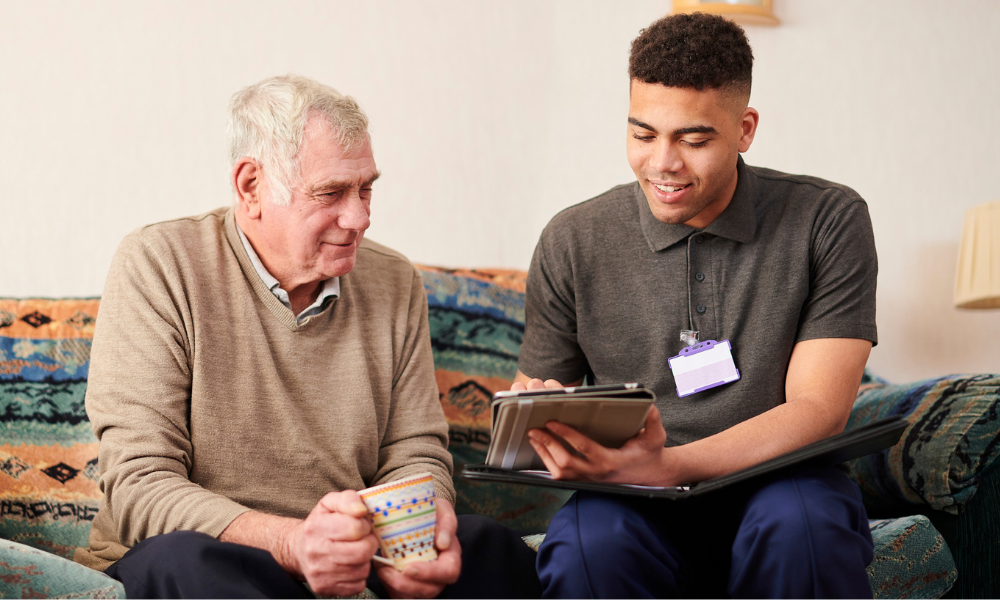
Hospice social workers help patients and families navigate benefits and paperwork. They coordinate care. They help keep far‑away family members informed and involved. When the details of daily life become overwhelming, they help families sort through what can be done next. Social workers also connect patients and families to specialized services such as therapeutic massage, end‑of‑life doula support and Threshold Singers choir. Goodwin Hospice is unique in that it offers all of these services to patients and their loved ones at no cost to them, thanks to the generous support of donors to the Goodwin Living Foundation Hospice Fund.
Their work often goes beyond what can fit neatly into a job description.
Goodwin Hospice social workers work alongside families with different histories, cultures and priorities. They sit with families who are already grieving someone who is still alive. They know when a question will help and when it won’t. They recognize that people in the same family may be in very different places and meet each person where they are. For patients who are alone, the social worker is often the person who faithfully visits and is present.
They pay attention, see the whole person and respond to what’s actually happening.
How Our Hospice Social Workers Show Up
When a patient’s son mentioned that a bedside visit from the U.S. Marines would be nice for his father (a 102‑year‑old World War II veteran) his hospice social worker brought the idea to the Goodwin Hospice team. In a matter of days, three Marines from the ceremonial platoon at Marine Corps Base Quantico arrived. They brought cake, sang The Marines’ Hymn and spent time talking with and honoring their fellow Marine.
In addition to facilitating large gestures of support such as this, Goodwin Hospice social workers can make smaller gestures to support a patient and their loved ones, with funding provided by the Goodwin Living Foundation. They might drop by with food and a grocery gift card, find support to help cover a dental bill or arrange for the patient’s driveway to be cleared after a snowstorm. They might come by to celebrate a birthday, replace a pair of worn slippers or drop off a small radio tuned it to a patient’s favorite station.
These are small acts that say: We see you. And what matters to you, matters to us.
Offering Continued Support and Care
Contrary to what might be expected, bereavement support at Goodwin Hospice doesn’t start after a death. Social workers begin identifying needs and risk factors in the very first hospice visit with patients and families and start to consider how each loved one may need to be supported after the death.
When a patient dies, our dedicated bereavement team continues that care. Families receive 13 months of support following their loved one’s passing that includes phone calls, mailings, individual counseling and the opportunity to attend support groups, along with help navigating practical matters that come up in the weeks and months after a death.
Each year, Goodwin Hospice social workers plan and host a beautiful Remembrance Day ceremony, bringing families together to honor their loved ones and spend time with others who understand the emotions they are carrying.
Grateful for Our Hospice Social Workers
What makes someone well suited to hospice social work is hard to define. It often comes down to a combination of training, judgment, emotional intelligence and a willingness to remain present through difficult, uncertain stretches.
For Kathryn McNeil, who leads our hospice social work team, these factors are what draws her to the work.
“I get to connect with individuals from diverse backgrounds and support them at such a significant time in their lives,” she said, “helping them find comfort and understanding as they navigate their goals of care and their grief journeys.”
Sometimes the impact is best captured by those who’ve benefitted from a hospice social worker’s care. As one family member, Danielle B., shared to her social worker: “Thank you for making this difficult time clearer, if not exactly easier.”
This Social Work Month, we are grateful for the Goodwin Hospice social workers who show up for patients and families and stay with them all the way through. “In the complexity of modern healthcare, social workers ground us in what matters most: the dignity of choice, the power of presence and the transformative impact of being heard,” said Beth Klint, Executive Director of Goodwin Hospice. “I see firsthand how much heart, skill and thoughtfulness our hospice social workers bring to this work, and how deeply patients and families feel their support.”
If a Goodwin Hospice social worker made a difference for you or someone you love, we would be honored to hear about it. You can learn more about the social and emotional care Goodwin Hospice provides here: https://goodwinhospice.org/services.
________________________
Noël Durman is Director of Hospice Giving at the Goodwin Living Foundation, where she works to connect donors with the meaningful care Goodwin Hospice provides every day. She brings more than 20 years of nonprofit fundraising experience spanning international conservation, conflict resolution and services for older adults.